How Location Pages Help Local Businesses Reach Customers in More Cities
If your business serves customers outside your home city, you probably want people in those nearby areas to find you too. The problem is that your website may not clearly tell Google or potential customers where you provide your services.
This is where location pages can help.
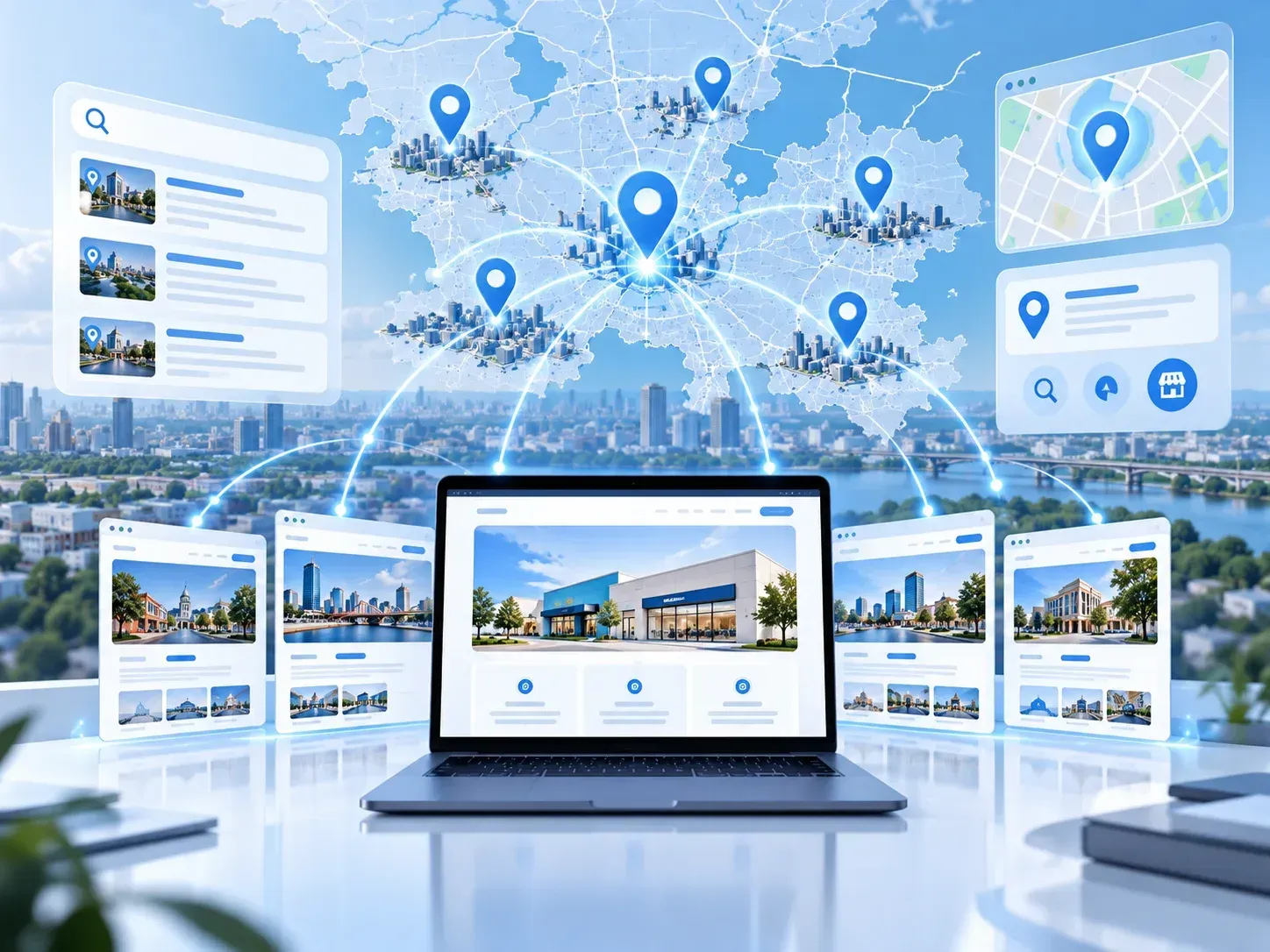
Location pages are individual pages on your website created for specific cities or service areas. Instead of having one general service page trying to reach everyone, you can build useful pages that explain what you offer to customers in each area.
When done correctly, location pages can support your local SEO strategy, bring more qualified visitors to your website, and create more opportunities for calls, quote requests, and booked jobs.
What Are Location Pages?
A location page is a webpage focused on a specific city or geographic area your business actually serves.
For example, imagine you own a roofing company based in Layton, Utah, but you also serve customers in Kaysville, Syracuse, Clearfield, and Farmington. Your website could have a separate page for each important service area.
Instead of only having a general roofing page, you might have pages focused on roofing services in Layton, Kaysville, Syracuse, and other nearby communities.
Each page gives you room to explain your services in a way that is useful to customers in that particular area.
A strong location page might include information about:
- Services you provide in that city
- Neighborhoods or surrounding communities you serve
- Common needs of customers in the area
- Completed projects or examples of your work
- Customer reviews or testimonials
- Frequently asked questions
- Clear ways to call, request a quote, or contact your business
The goal is not simply to mention the city's name dozens of times. The page should actually help someone who lives or works in that area.
How Location Pages Can Improve Local Search Visibility
Think about how people search for local services.
Someone usually doesn't search for only "roof repair." They might search for "roof repair Layton," "roofing company near me," or "roof repair in Kaysville."
Google wants to provide results that are useful and relevant to that person's search.
A well-built location page gives search engines more information about the services you provide and the areas you serve. It also gives potential customers a page that directly matches what they were searching for.
That can create opportunities to appear for more city-specific searches.
For example, if your main website talks almost entirely about your business in Layton, Google may have less information connecting your services with another city you serve. Creating a detailed page about your work in that area can make the relationship clearer.
However, simply creating dozens of nearly identical city pages is not a good SEO strategy. Google specifically warns against pages targeting different cities that are substantially similar and exist mainly to funnel visitors somewhere else.
Quality matters.
Each location page should be created for real customers in a real service area, not simply to stuff another city keyword onto your website.
What Makes a Good Location Page?
A strong location page needs more than a city name and a few paragraphs of generic content.
Start by thinking about what someone in that city would actually want to know before choosing your business.
Your page should clearly explain what you do, where you provide the service, why customers can trust your company, and what they should do next.
You can also make individual location pages more useful by adding information unique to that area. This could include nearby neighborhoods, local project examples, photos of completed work, customer testimonials, common questions, or details about the services most often requested in that community.
Most importantly,
don't copy and paste the same content onto every page and simply change the city name.
Google's spam policies warn against creating large numbers of unoriginal pages primarily to manipulate search rankings instead of helping users.
Your location pages should feel like they were written for the people who live in that community.
Location Pages and Your Google Business Profile Work Together
Your website is only one piece of a strong local SEO strategy.
Your Google Business Profile can also tell Google and customers where you provide services. Google allows eligible service-area and hybrid businesses to specify the cities, postal codes, or other areas they serve.
But there is an important difference between a
website location page and a
Google Business Profile location.
Creating a page on your website for a city does not mean you should create another Google Business Profile for that city.
Google says service-area businesses generally use one profile for the area they serve. Separate profiles may be appropriate when a business has separate legitimate locations with their own staff and service areas.
This is where businesses sometimes get themselves into trouble.
You don't need fake offices or virtual addresses just because you want customers from another city. Instead, focus on building a strong website with useful service and location content while keeping your Business Profile accurate.
When your website, Business Profile, reviews, business information, and local content all send clear and consistent signals, you are building a much stronger local presence.
Turn More Local Searches Into Real Leads
Getting traffic is great, but traffic alone doesn't grow a business.
You want the right people finding your website when they are actively looking for the services you provide.
That's the real value of a well-planned location page strategy.
Instead of expecting one page to compete across every city you serve, you can build a website structure that clearly explains your services and geographic coverage.
Someone searching from Layton can find information relevant to Layton. Someone looking for the same service in Kaysville can find information that speaks to Kaysville.
And when they reach the page, make the next step obvious.
Give visitors a clear call to action such as:
- Request a Free Quote
- Schedule a Consultation
- Call Our Team
- Get Your Free Website or SEO Audit
- Talk With a Local SEO Expert
The easier you make it for visitors to understand your business and take action, the better chance you have of turning search traffic into actual leads.
At
Impact Layton SEO, we help local businesses build websites and local SEO strategies designed around more than rankings. The goal is to get your business found by the right people and turn that visibility into qualified leads.
If your company serves multiple cities but your website isn't reaching customers in those areas, your website structure may be holding you back.
Ready to find out where you're missing opportunities? Contact Impact Layton SEO for an SEO and website audit and let's see where your business can grow next.
Check out our ways of managing Google Business Profiles, Websites, and help with Google Ads
Ready to work with My Agency Site?
Let's connect! We’re here to help.
Send us a message and we’ll be in touch.
Or give us a call today at 111-222-3333
Agency Contact Form
More Marketing Tips, Tricks & Tools