Why Your Homepage Should Not Try to Rank for Every Service Your Business Offers
Your homepage is one of the most important pages on your website. It introduces your business, explains what you do, builds trust, and helps visitors take the next step. But there is one job your homepage should not be forced to do.
It should not try to rank for every service your business offers.
Many local businesses make this mistake. They add every service, keyword, and location to the homepage hoping Google will rank that one page for everything. Instead, this can create a page that feels crowded and unfocused.
A better local SEO strategy gives your homepage a clear purpose while using dedicated service pages to target specific searches. This can make your website easier for both Google and potential customers to understand.

1. Your Homepage Needs a Clear Main Focus
Think of your homepage as the front door of your business.
Someone who visits should quickly understand who you are, what you do, where you work, and why they should choose you.
Problems can start when a business tries to target too many different services on this page.
Imagine a home service company offers roofing, siding, gutters, windows, and insulation. If the homepage tries to fully optimize for every one of those services, the content can quickly become confusing.
The same problem can happen with almost any local business.
A digital marketing company might offer SEO, web development, Google Ads, social media marketing, and Google Business Profile management. An auto glass company may provide windshield repair, replacement, ADAS calibration, and mobile service.
These services can certainly be mentioned on the homepage. However, trying to make the homepage the main ranking page for every service is different.
Your homepage should introduce the bigger picture.
Your service pages can handle the details.
2. Give Important Services Their Own Pages
If a service is important enough to your business, it may deserve its own page. Dedicated service pages give you more room to answer the questions potential customers actually have.
Instead of placing two short sentences about a service on your homepage, you can build a complete page explaining:
- What the service includes
- Who may need it
- Common problems the service solves
- Your process
- Why customers choose your company
- Areas you serve
- Frequently asked questions
- How to request service
This gives visitors more useful information while also providing search engines with stronger context.
For example, someone searching for "roof repair" is looking for something different from someone searching for "gutter installation."
If the company provides both services, separate pages allow each topic to be explained clearly.
This can create a better match between the person's Google search and the page they land on.
That match matters.
When someone immediately sees information related to what they searched for, they have a stronger reason to stay on the website and learn more.
3. Avoid Keyword Competition Inside Your Own Website
There is another reason to give pages a clear purpose.
You do not want several pages competing for the exact same topic without a good reason.
If your homepage, service page, blog post, and location page all target the same primary keyword with nearly identical content, search engines may have a harder time understanding which page best answers the search. A cleaner website structure gives different pages specific roles.
For example:
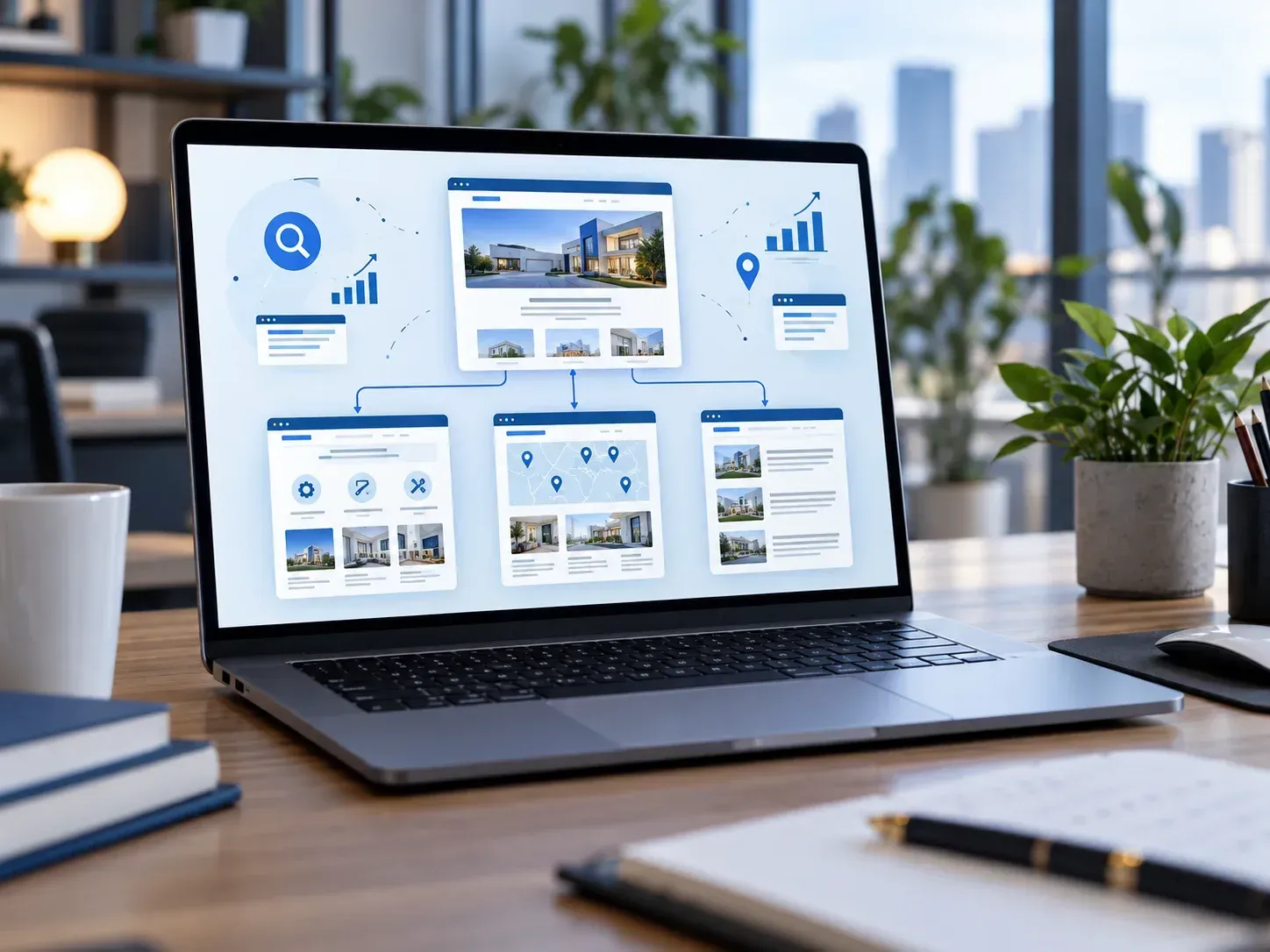
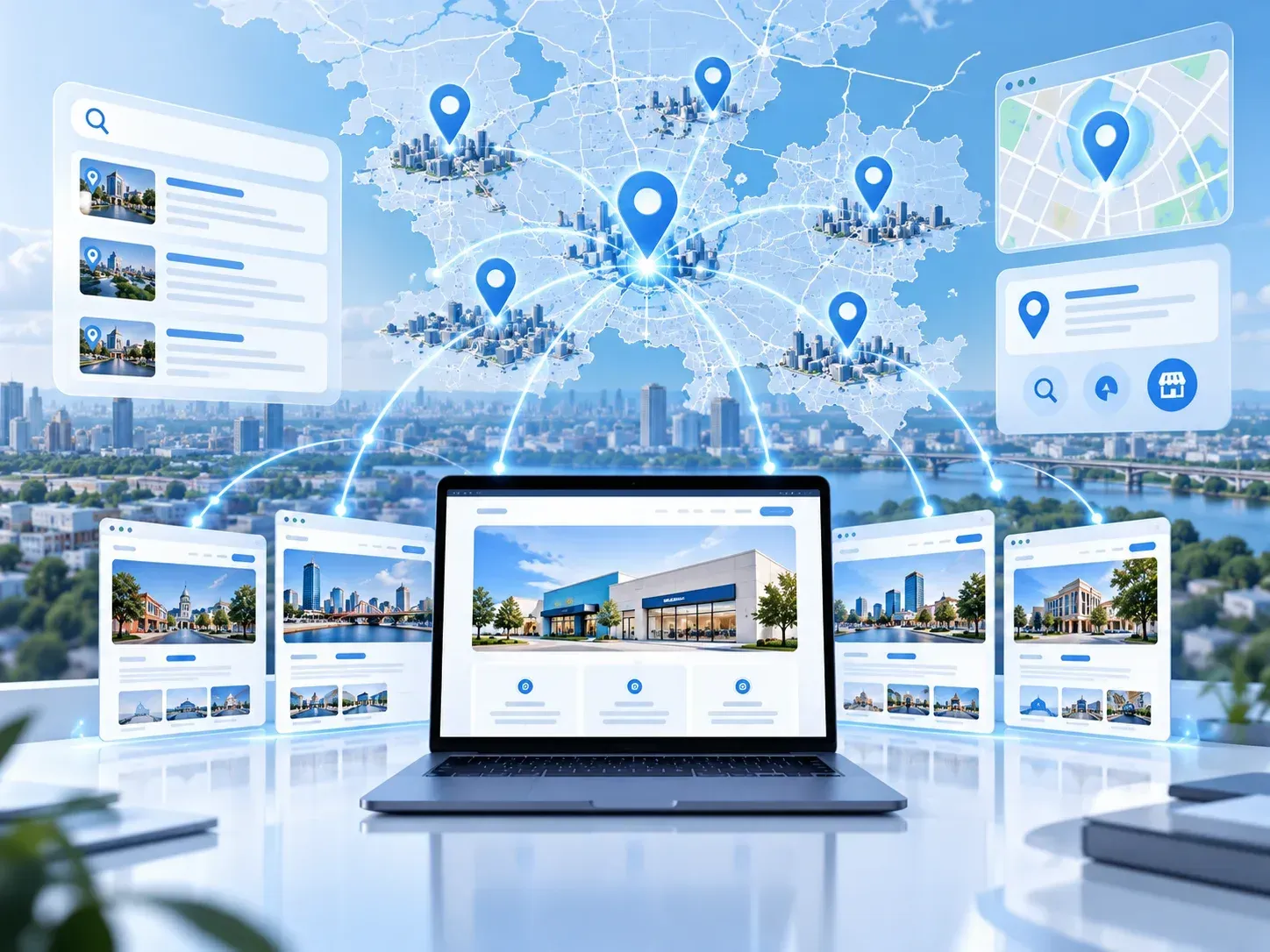
Homepage: Introduces the company and main services.
Service Page: Goes deeper into one specific service.
Location Page: Explains your services in a specific market or service area.
Blog Post: Answers a question related to the service.
Contact Page: Makes it easy to call, request a quote, or schedule an appointment.
These pages can support each other through internal links. A blog article about signs that a roof needs repair could link to the main roof repair service page. The service page could then guide visitors toward requesting an inspection or estimate.
Now your content works together instead of fighting for the same job.
4. Better Website Structure Can Create a Better Customer Journey
SEO is not only about keywords.
The people visiting your website matter too.
Imagine a homeowner searches for a specific service and clicks your website. They do not want to read through every service your company provides before finding the information they need.
They want an answer quickly.
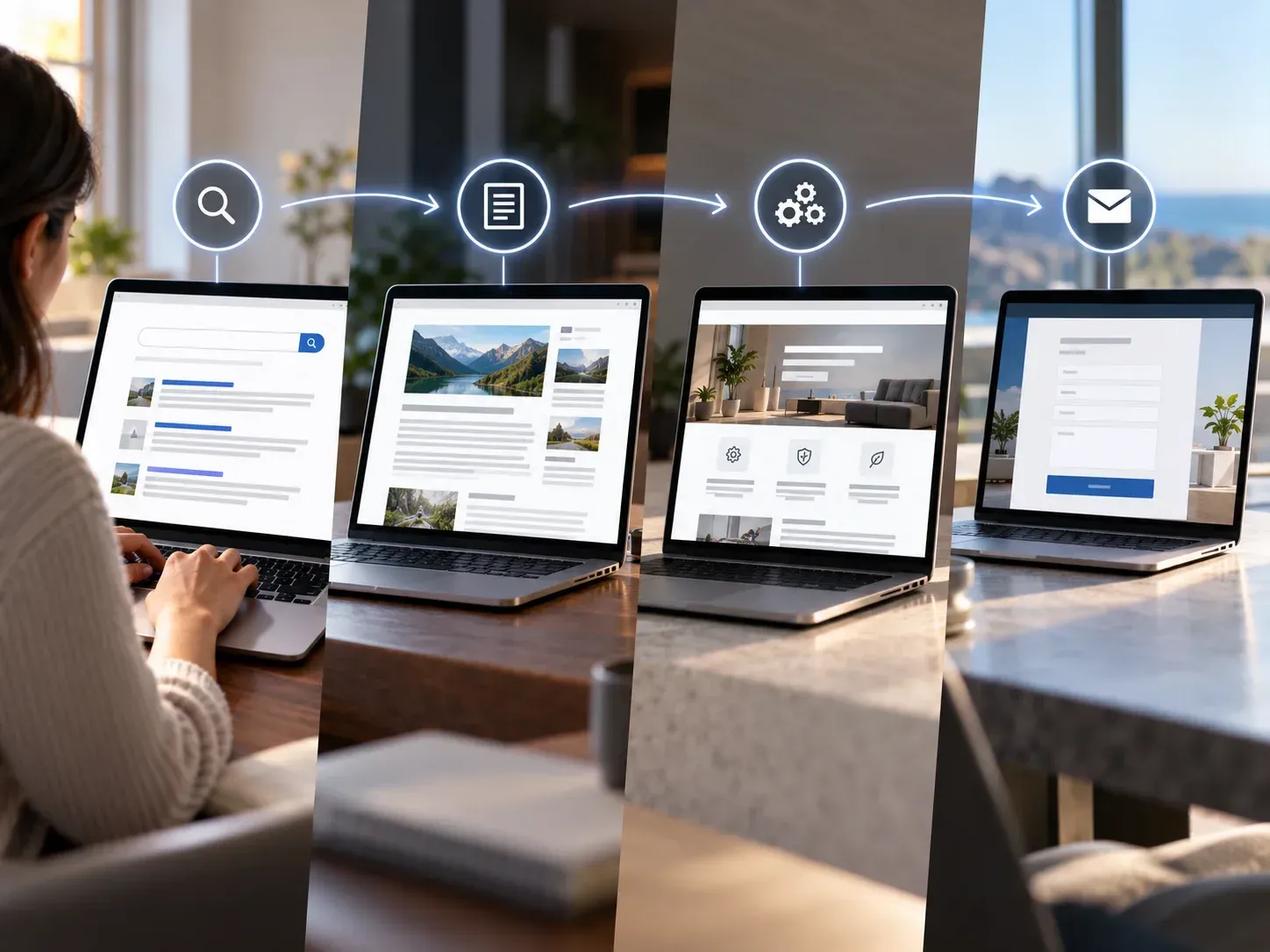
A well-organized website creates a natural path:
Google Search → Relevant Page → Helpful Information → Call-to-Action → Contact
That path can make the website easier to use and help turn more visitors into leads.
Your navigation should support this structure as well.
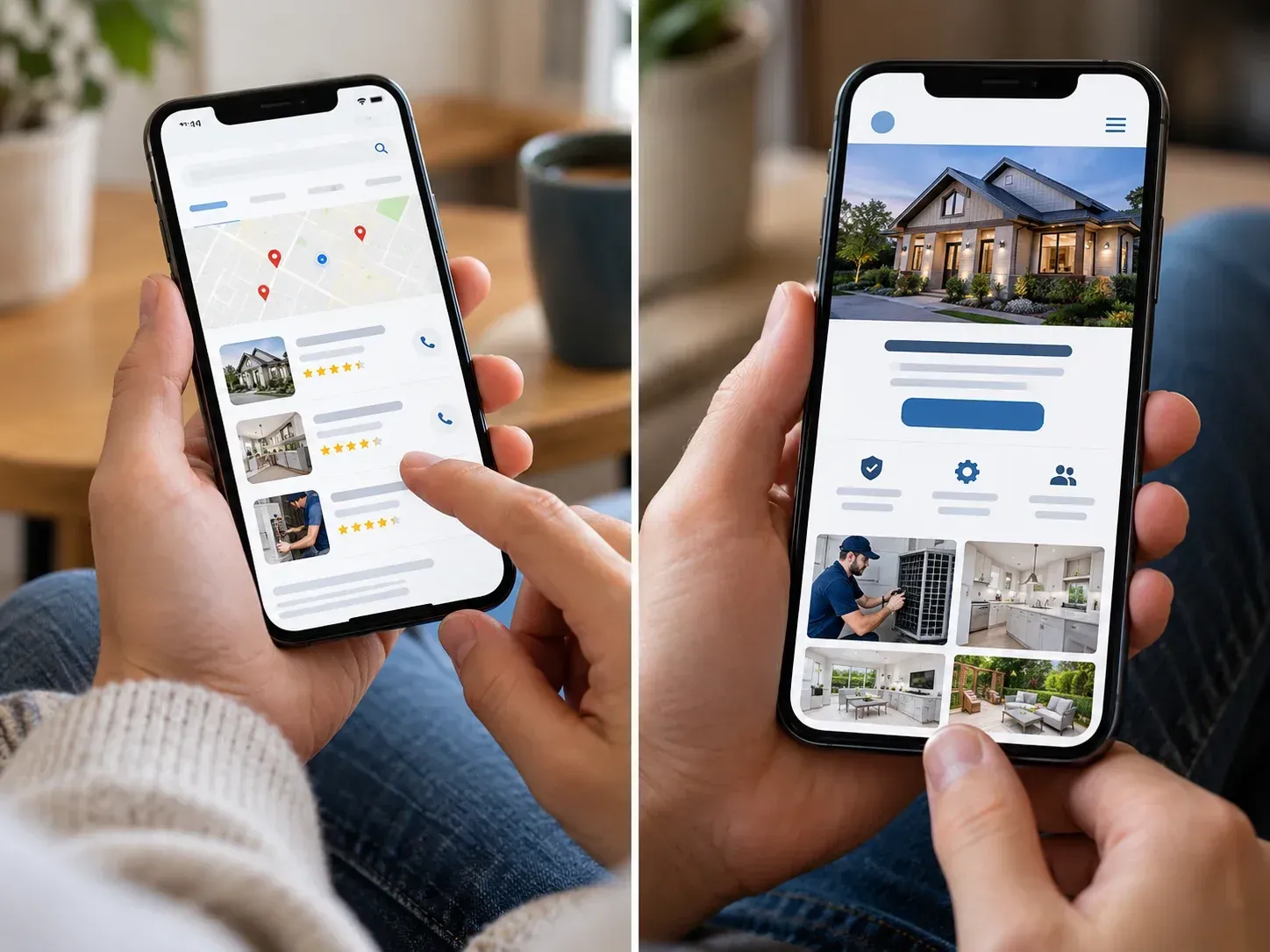
Instead of placing everything on the homepage, create an easy-to-understand services menu. Visitors can quickly choose what they need and learn more.
You can also connect related pages with internal links.
For example, your homepage might include a short section introducing your major services. Each service box can then include a button such as:
Learn More
Explore This Service
Request a Quote
The homepage still tells visitors what you offer without trying to explain everything in one place.
Quick Website SEO Checklist
Take a look at your current website and ask:
- Does the homepage clearly explain the main purpose of the business?
- Does each major service have a useful dedicated page?
- Are important service pages easy to find in the navigation?
- Does each page focus on a clear search intent?
- Are related pages connected with internal links?
- Does each service page have a strong call-to-action?
- Are you repeating nearly identical content across multiple pages?
If several answers are "no," your website structure may need improvement.
5. Build Your Website Around What Customers Search For
A strong local SEO strategy starts with understanding what potential customers actually type into Google.
Different searches often deserve different pages.
Someone looking for general information about your company may land on the homepage. Someone searching for a specific service should ideally find a page focused on that service.
This does not mean you need hundreds of pages.
More pages do not automatically mean better SEO.
Every page should have a reason to exist.
A useful service page should provide real information, answer questions, and help visitors decide what to do next. Creating dozens of thin pages just to target slightly different keyword variations can make a website weaker instead of stronger.
Focus on quality, search intent, and clear organization.
When your homepage and service pages each have a defined job, the entire website becomes easier to understand.
Frequently Asked Questions
Can I mention all my services on my homepage?
Yes. Your homepage should give visitors a clear overview of your major services. The difference is that you do not need to explain every service in full or target every possible service keyword on the homepage.
How long should a service page be?
There is no perfect word count. The page should be long enough to answer the visitor's important questions without adding unnecessary content just to make the page longer.
Should every small service get its own page?
Not always. Closely related services can sometimes be grouped together. A separate page makes the most sense when the service has its own search demand, customer intent, and enough useful information to support a complete page.
Can service pages help generate more leads?
Yes. A focused service page can speak directly to what a potential customer needs and provide a clear next step, such as calling, requesting a quote, or scheduling a consultation.
Stop Asking One Page to Do Everything
Your homepage has an important job, but it cannot do everything.
It should introduce your company, communicate your value, highlight your main services, establish trust, and point visitors in the right direction.
Your individual service pages can then go deeper.
This creates a website where each page has a clear purpose and potential customers can find the information they need without digging through a crowded homepage.
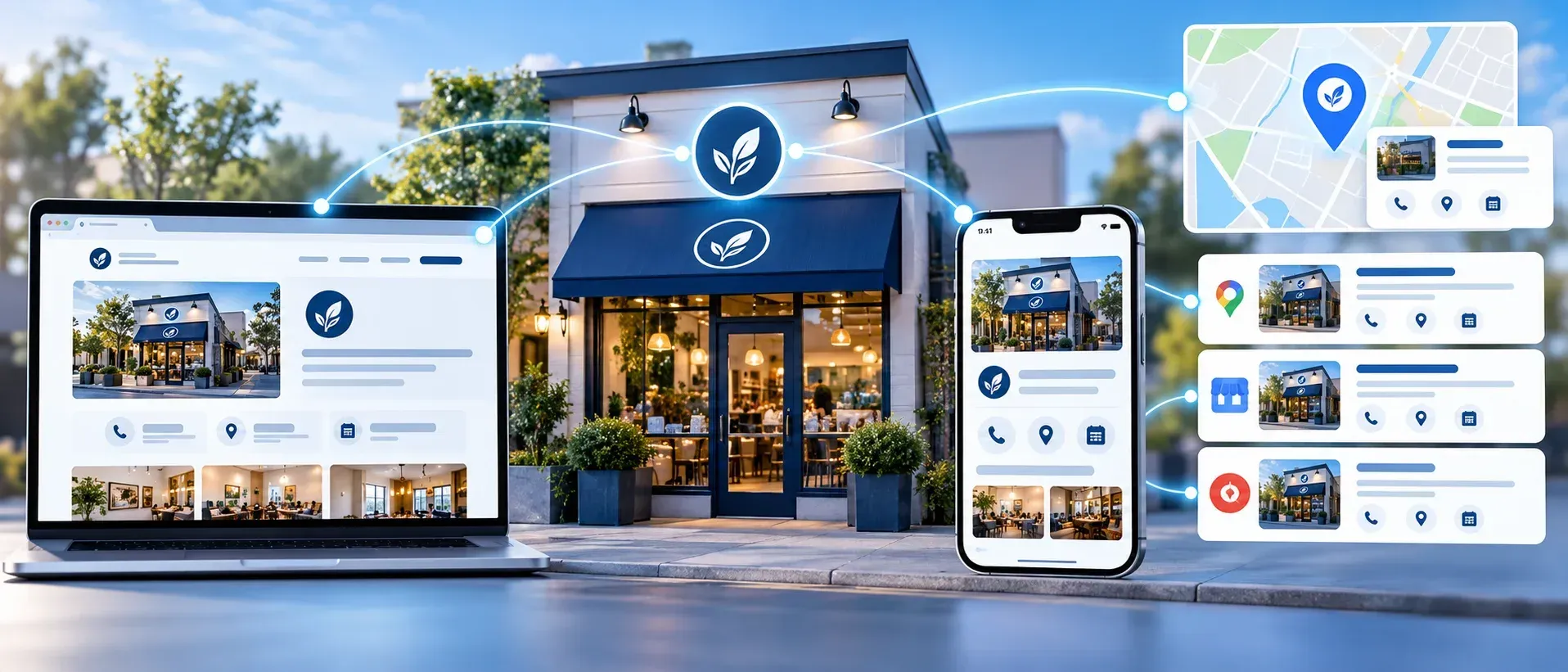
At Impact Layton SEO, we help local businesses combine smart web development with local SEO strategies built around how customers actually search. That includes creating the right site structure, service pages, internal links, and conversion paths to help turn more searches into real opportunities.
Not sure if your website is targeting too many keywords on the wrong pages? Request a free website and SEO audit from Impact Layton SEO and find out where your site has room to grow.
Check out our ways of managing Google Business Profiles, Websites, and help with Google Ads
Ready to work with My Agency Site?
Let's connect! We’re here to help.
Send us a message and we’ll be in touch.
Or give us a call today at 111-222-3333
Agency Contact Form
More Marketing Tips, Tricks & Tools