The Website Features Every Small Business Needs to Turn Visitors Into Paying Customers
A small business website should do more than explain what you offer. It should help visitors understand your value, trust your company, and take the next step. That step may be calling your business, filling out a form, requesting a quote, or booking a service.
Many business websites look clean but still fail to bring in leads. The problem is often not the design itself. The problem is that the website does not make it easy for people to act. The right web development strategy can turn your website into a powerful sales tool. Below are the most important features every small business website needs to attract visitors and convert them into paying customers.
A Clear Message at the Top of the Page
Visitors should understand your business within a few seconds of landing on your website. They should not have to search through several paragraphs to figure out what you do. The top section of your homepage should clearly explain:
- What service you provide
- Who you help
- Where you work
- Why someone should choose you
- What action they should take next
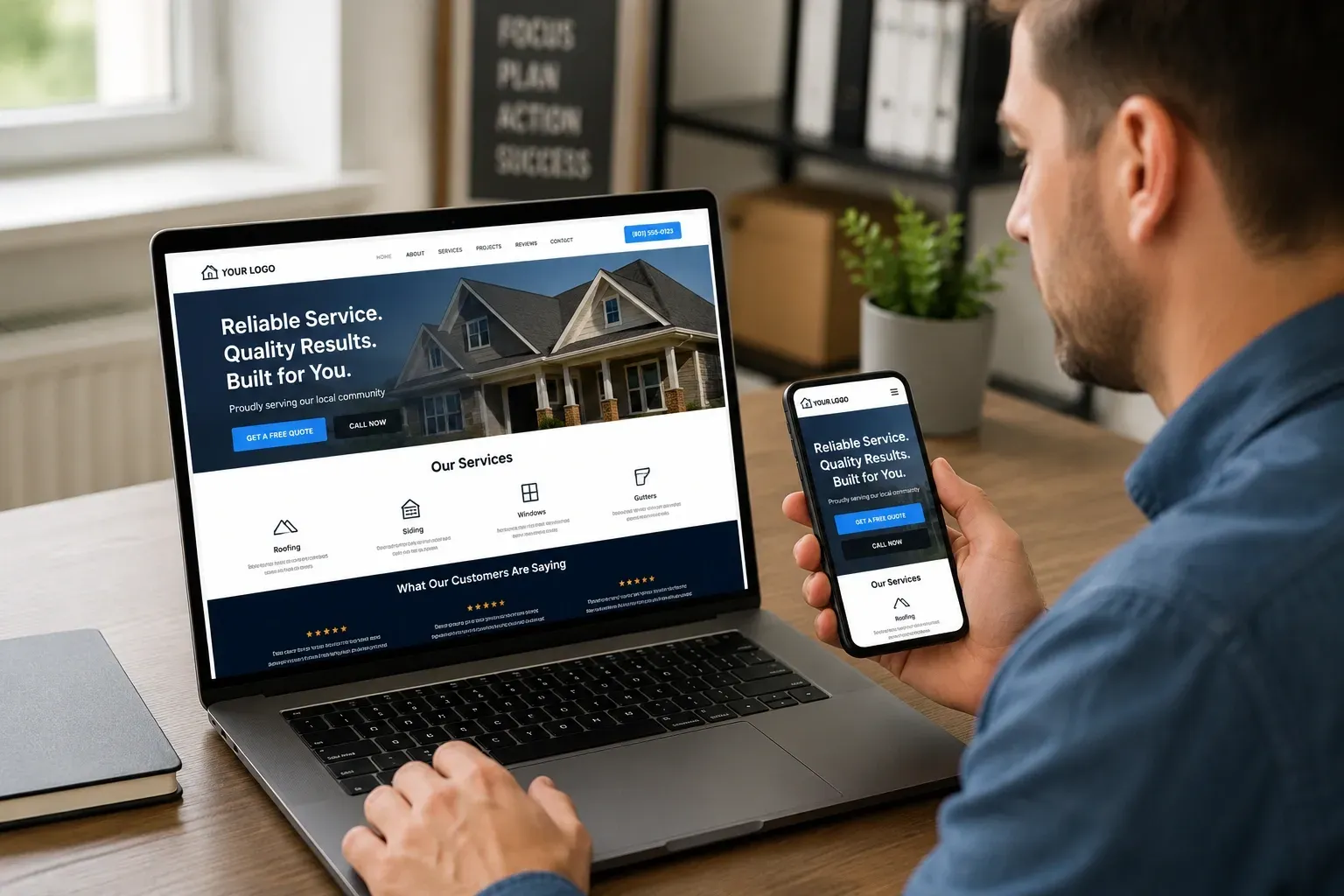
For example, a local roofing company should not use a broad headline such as “Quality You Can Trust.” That message sounds good, but it does not tell people what the company actually does. A stronger headline might be, “Reliable Roof Repair and Replacement for Homeowners in Layton, Utah.”
This type of message gives visitors useful information right away. It also helps search engines understand the focus of the website. Your main call-to-action should also appear near the top of the page. A button such as “Get a Free Quote” or “Schedule a Consultation” gives visitors a clear next step.
Easy Navigation That Helps Visitors Find Answers
A visitor should be able to find important information without getting confused. If the menu is crowded, unclear, or hard to use, people may leave before contacting your business.
A simple website menu often works better than one with too many choices. Most small business websites need pages such as:
- Home
- About
- Services
- Service Areas
- Reviews
- Blog
- Contact
Each main service should also have its own page when possible. This gives visitors more information and helps your website rank for specific search terms.
For example, a digital marketing agency may need separate pages for web development, local SEO, Google Ads, and social media marketing. This makes it easier for customers to learn about each service.
Navigation should also work well on mobile devices. Many people visit local business websites from their phones. Buttons should be easy to tap, menus should open correctly, and phone numbers should be clickable.
A simple user experience can keep visitors on your website longer and guide them toward contacting your business.
Strong Calls-to-Action Throughout the Website
One call-to-action at the bottom of the page is usually not enough. Visitors may be ready to act at different times while reading your content.
Your website should include clear calls-to-action in several places. These may include:
- Call now
- Request a free quote
- Book an appointment
- Schedule a consultation
- Send us a message
- Learn more about our services
The wording should be direct and easy to understand. Avoid buttons that only say “Submit” or “Click Here.” These phrases do not explain what happens next.
The call-to-action should also match the page. A service page may use “Request Service,” while a blog post may use “Talk With Our Team.”
Contact forms should be short and simple. Asking for too much information can make people leave. In most cases, a name, phone number, email address, and short message are enough to begin the conversation. The easier you make the process, the more likely visitors are to complete it.
Trust-Building Features That Reduce Doubt
Before customers contact a business, they often look for proof that the company is reliable. Your website should answer the silent question, “Can I trust these people?” Customer reviews are one of the strongest trust-building features. Real reviews show that other people have used your services and had a positive experience.
You can also build trust by adding:
- Business certifications
- Years of experience
- Before-and-after photos
- Project examples
- Team photos
- Service guarantees
- Awards or memberships
- Links to social media profiles
- Clear contact information
Avoid using too many stock photos. Real images of your team, work, equipment, or office can make your business feel more personal and credible. An About page is also important. Customers want to know who they are hiring. Share your company story, values, experience, and approach to customer service.
Your website should also have a professional design. Broken links, outdated information, blurry photos, and spelling errors can make visitors question the quality of your business.
Trust grows when your website feels accurate, active, and easy to use.
Fast Speed, Mobile Design, and Local SEO
A slow website can cost your business valuable leads. Visitors may leave if pages take too long to load, especially when they are using a mobile device. Website speed can be improved by reducing image sizes, removing unnecessary plugins, using reliable hosting, and keeping the site code clean.
Mobile-friendly design is just as important. Text should be easy to read without zooming. Buttons should be large enough to tap. Forms should work correctly, and pages should fit the screen. Your website should also support your local SEO strategy. Local SEO helps nearby customers find your business when they search for services in their area. Important local SEO elements include:
- Your business name, address, and phone number
- Location-based service pages
- Local keywords
- Customer reviews
- Google Business Profile links
- Helpful local content
- Accurate title tags and meta descriptions
A strong website and a strong local SEO plan work together. The website gives customers the information they need, while local SEO helps them discover it.
Build a Website That Works for Your Business
Your website should be one of your hardest-working marketing tools. It should attract the right visitors, explain your services clearly, build trust, and make it easy for customers to contact you. Strong web development focuses on both design and results. A website should look professional, but it should also support your business goals.
Impact Layton SEO helps small businesses build websites designed for visibility, trust, and lead generation. We combine web development, local SEO, and digital marketing strategies to help businesses reach more customers and grow online.
Contact Impact Layton SEO today to learn how a better website can turn more visitors into paying customers.
Check out our ways of managing Google Business Profiles, Websites, and help with Google Ads
Ready to work with My Agency Site?
Let's connect! We’re here to help.
Send us a message and we’ll be in touch.
Or give us a call today at 111-222-3333
Agency Contact Form
More Marketing Tips, Tricks & Tools