What Makes a High Converting Website for a Local Service Business?
A website should do more than look good. For a local service business, it should help turn visitors into calls, form submissions, appointments, and paying customers.
Many business owners spend money on a new website but still wonder why the phone is not ringing. The problem is often not traffic. It is what happens after someone lands on the site.
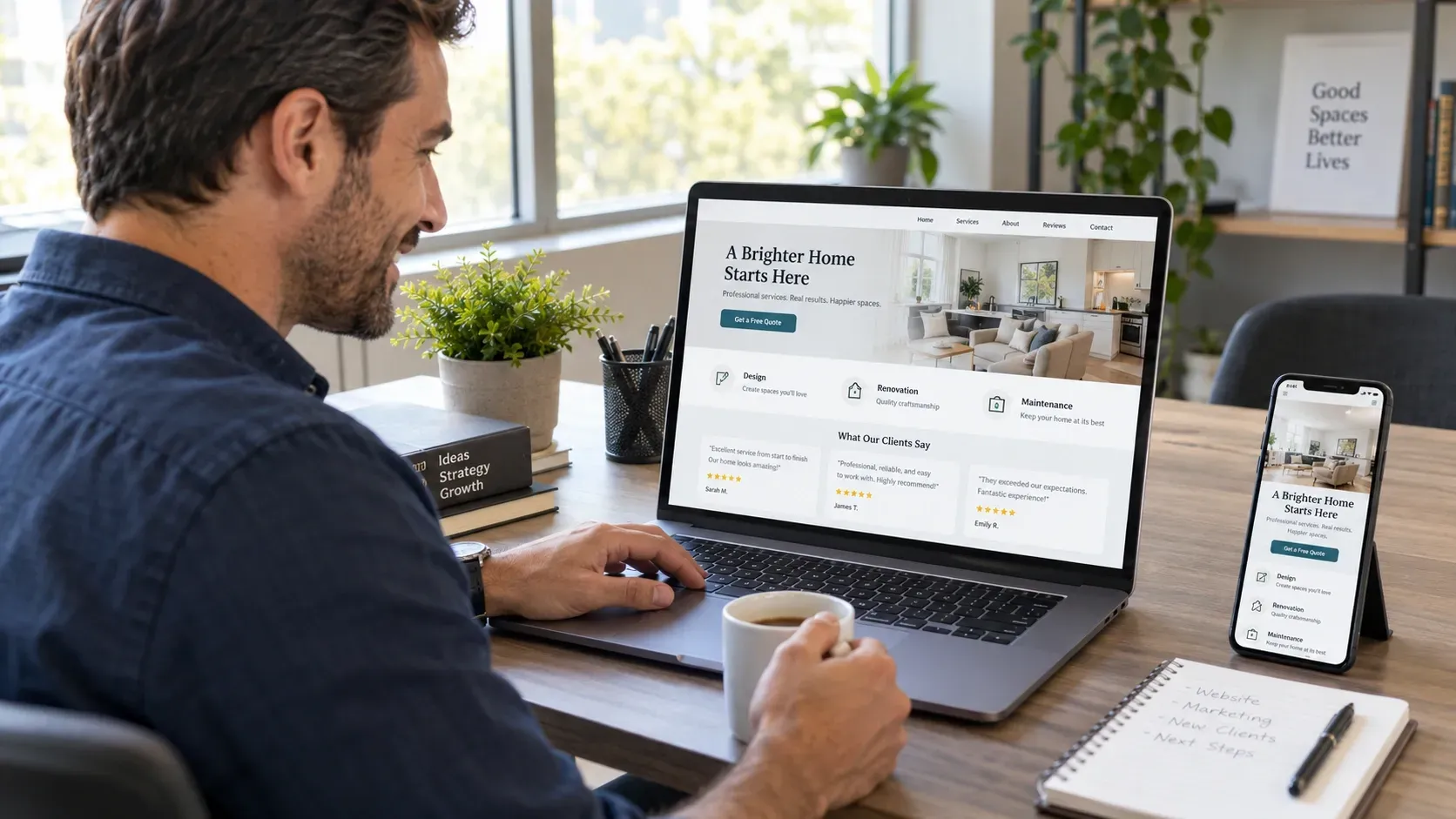
A high converting website makes it easy for visitors to understand what you do, trust your business, and take the next step. When those pieces work together, your website becomes more than an online brochure. It becomes a lead generation tool.
Here is what makes the biggest difference.
Make Your Message Clear Right Away
When someone lands on your website, they should quickly understand three things:
- What service you provide
- Where you provide it
- How they can contact you
Visitors should not have to search through several pages to figure out what your business does.
Your main headline should clearly explain your primary service. The supporting text should give visitors a reason to keep reading.
For example, a local roofing company should not use a vague headline like:
“Building Better Futures”
That may sound professional, but it does not tell a homeowner what the company actually does.
A better headline would be:
“Professional Roof Repair and Replacement in Layton, Utah”
That immediately gives the visitor useful information. Clear messaging also helps potential customers feel more confident. If people understand what you offer within a few seconds, they are more likely to continue exploring your website instead of leaving.
Build Trust Before Asking for the Sale
People are careful about who they hire, especially for services involving their home, money, health, or business.
Before someone contacts you, they usually want proof that your company is trustworthy.
A strong website can help provide that proof.
Trust building elements may include:
- Customer reviews and testimonials
- Photos of completed work
- Years of experience
- Certifications or awards
- Service guarantees
- Local phone numbers
- Clear contact information
- Photos of your team
- Links to social media profiles
- Frequently asked questions
Real photos can be especially powerful. Stock images can make a website look polished, but photos of your actual team, vehicles, projects, office, or service area help people feel like they know who they are dealing with.
Reviews are also important. A few strong testimonials placed throughout the website can help visitors feel more comfortable taking the next step.
Trust should not be limited to one testimonials page. It should be built into the entire website experience.
Make It Easy for Visitors to Take Action
A visitor should never wonder what they are supposed to do next.
Every important page on your website should include a clear call to action.
Common calls to action include:
- Request a Free Estimate
- Schedule a Consultation
- Call Now
- Get a Quote
- Book an Appointment
- Contact Our Team
Calls to action should appear in several places throughout the site.
For example, you may have one near the top of the homepage, another after explaining your services, and another near the bottom of the page.
This is important because visitors make decisions at different times.
One person may already be ready to call when they land on the website. Another may want to read about your services, reviews, and experience first.
Make it easy for both visitors to contact you when they are ready.
Contact forms should also be simple.
Asking for too much information can stop people from completing a form. In many cases, you only need basic details such as:
- Name
- Phone number
- Service needed
- Short message
The easier the process feels, the more likely visitors are to complete it.
Design Your Website for Mobile Visitors
Many people searching for local services are using their phones. They may be looking for a plumber during a leak, searching for a nearby massage therapist, comparing roofing contractors, or trying to find a restaurant while they are already out.
If your website is hard to use on a phone, you may lose that customer.
A mobile friendly website should load quickly, have easy to read text, and use buttons that are simple to tap.
Your phone number should also be easy to find. A clickable call button can make a big difference for local service businesses because it removes extra steps. Instead of copying a phone number or searching for the contact page, visitors can call your business immediately.
Navigation should also stay simple. Visitors should be able to reach important pages such as your services, about page, reviews, and contact information without getting lost.
Good design is not about adding more features. It is about making the customer journey easier.
Create Service Pages That Answer Real Questions
One of the biggest mistakes local businesses make is putting every service on one short page.
Each major service deserves its own detailed page. A dedicated service page gives you more space to explain the service, answer questions, build trust, and encourage visitors to contact you.
It can also support your local SEO strategy by helping search engines better understand what your business offers.
A strong service page should explain:
- What the service includes
- Who may need the service
- Common problems the service solves
- What customers can expect
- Why they should choose your company
- How to schedule the service
Think about the questions customers normally ask you over the phone.
Those same questions should often be answered on your website.
The more useful information you provide, the easier it becomes for visitors to feel comfortable contacting your business.
Your Website Should Work Like a Salesperson
A high converting website does not simply sit online and wait for people to find it.
It guides visitors toward becoming customers. It clearly explains your services, builds trust, answers common questions, and makes contacting your business simple.
Small improvements can have a major impact. A clearer headline, better service pages, stronger reviews, faster mobile performance, or more visible calls to action can sometimes generate more leads without increasing your advertising budget.
At Impact Layton SEO, we help local businesses build websites designed around both visibility and conversions. The goal is not simply to create a website that looks professional. The goal is to create a website that helps your business grow.
If your current website is getting visitors but not enough calls or inquiries, it may be time to look at how well the site is guiding people toward the next step.
A better website experience can help turn more of your existing traffic into real opportunities.
Frequently Asked Questions
What is a high converting website?
A high converting website encourages a larger percentage of visitors to take an important action, such as calling, requesting a quote, booking an appointment, or submitting a contact form.
Does website design affect conversions?
Yes. Clear layouts, readable text, simple navigation, visible contact buttons, and strong calls to action can make it easier for visitors to become leads.
How important are customer reviews on a website?
Reviews can help build trust and reduce hesitation. Visitors are often more comfortable contacting a business when they can see positive experiences from past customers.
Should every service have its own webpage?
Major services usually benefit from having dedicated pages. This allows you to provide more useful information while also helping your website target relevant search terms.
Can local SEO and web design work together?
Yes. A properly structured website can support local SEO while also creating a better experience for visitors. Strong websites are built to help people find the business and take action once they arrive.
Check out our ways of managing Google Business Profiles, Websites, and help with Google Ads
Ready to work with My Agency Site?
Let's connect! We’re here to help.
Send us a message and we’ll be in touch.
Or give us a call today at 111-222-3333
Agency Contact Form
More Marketing Tips, Tricks & Tools